
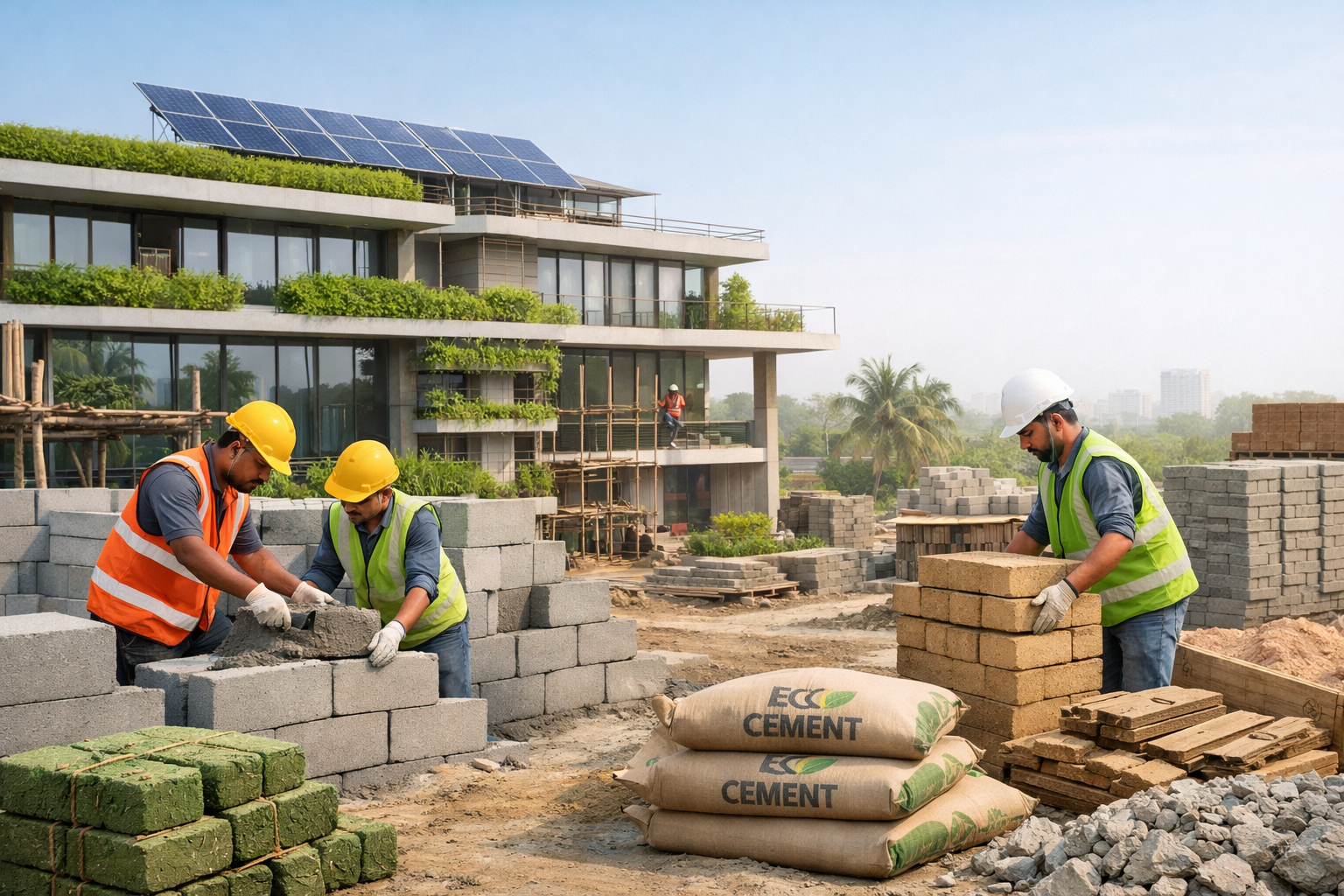
In India, sustainable building is no longer just a trend; it’s becoming a must. Builders and homeowners are having to reconsider how they build because of rising energy prices, environmental rules, and consumers who care about the environment. Eco-friendly materials that don’t hurt performance but do hurt the environment are at the heart of this change.
But picking the proper source is just as crucial as picking the right material. There are a lot of claims in the market; therefore, it’s important to find a trustworthy green construction materials producer. Choosing eco-friendly building materials in India that are known for their quality and long-lastingness can have a big impact on the project’s success and sustainability.
1. Know What “Eco-Friendly” Really Means
Not all products that say “green” are really good for the environment. Real eco-friendly materials are those that cause the least amount of harm to the environment over their whole life cycle, from making them to using them to throwing them away. This means that there is less embodied energy, carbon emissions, and waste.
A trustworthy maker of green building materials will be open about where they get their supplies, how they make them, and how they affect the environment. Certifications, test results, and statements about sustainability help tell the difference between real solutions and marketing claims.
2. Check how well the material works and how long it lasts
Being eco-friendly doesn’t imply giving up strength or a long life. AAC blocks, fly ash products, recycled aggregates, and low-VOC finishes are among the materials that still need to meet the structural and performance standards for Indian conditions.
When looking for eco-friendly building materials in India, make sure they meet IS norms and industry standards. A good manufacturer spends money on testing and quality control to make sure that materials work the same way, no matter what the weather or load is.
3. Look at the processes and certifications used in manufacturing
How a material is made has a big impact on its environmental footprint. Responsible manufacturing is shown by plants that use less water, recycle waste, and use less energy.
Well-known green building materials manufacturers usually have certifications like ISO standards, green product labels, or third-party sustainability validations. These certificates show that a company is serious about being environmentally friendly, not just putting on a show.
4. Think about availability, logistics, and scalability
If it’s hard to get or comes in small quantities, even the best green material loses value. For big projects, you need manufacturers you can trust to satisfy volume needs without delays or changes in quality.
When choosing eco-friendly building materials in India, think about the manufacturer’s manufacturing capacity, distribution network, and lead times. A scalable supplier makes sure that projects stay on schedule and that sustainability goals are met at every stage.
5. Evaluate the level of technical support and industry knowledge
When using green products, you may need to handle, install, or design them in a certain way. Manufacturers that provide training, technical support, and documentation contribute a lot of value beyond the product itself.
An experienced green building materials maker works with architects, builders, and engineers to make sure the materials are used correctly. This helps cut down on mistakes on the job site, makes things go more smoothly, and gets the most out of the environmental benefits of green products.
The Right Manufacturer Makes Sustainability Useful
Making smart choices is the first step towards sustainable building. It’s crucial to choose the correct eco-friendly materials, but it’s even more important to choose the right manufacturer to make sure those materials really help the environment and the structure.
Builders can securely get eco-friendly building materials in India from a renowned green construction materials manufacturer by putting transparency, performance, certifications, and support first. The end result is something that is not just better for the environment, but also smarter, stronger, and ready for the future.